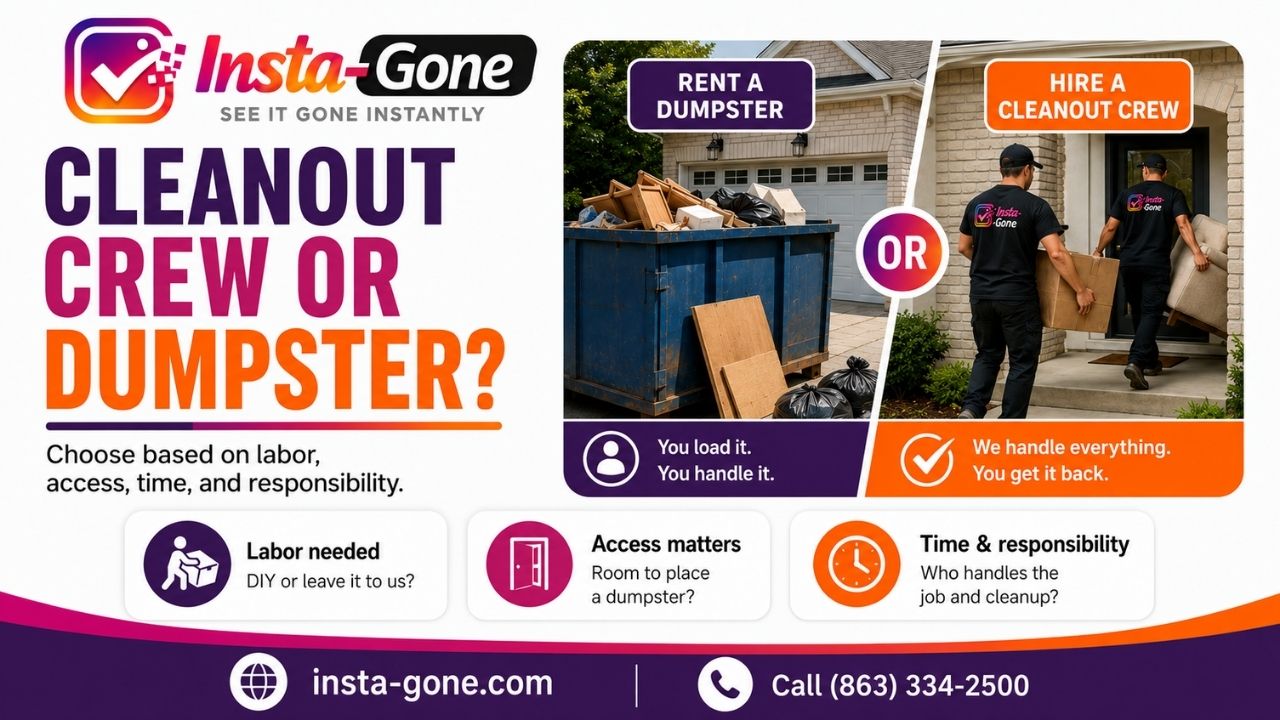
Cleanout Crew or Dumpster? How to Choose the Right Option
A dumpster can look like the simple answer until the work starts. Someone still has to lift the furniture, carry the boxes, follow property rules, protect the access path, and make sure the space is cleared before the deadline.
That is why the better question is not always, “Should I rent a dumpster?” The better question is, “Who is responsible for getting this cleanout finished?”
For property managers, business owners, landlords, and homeowners, the right choice usually comes down to labor, access, time, and responsibility. A dumpster gives you a container. A cleanout crew gives you hands, planning, removal, and a clean finish.
When a Dumpster Makes Sense
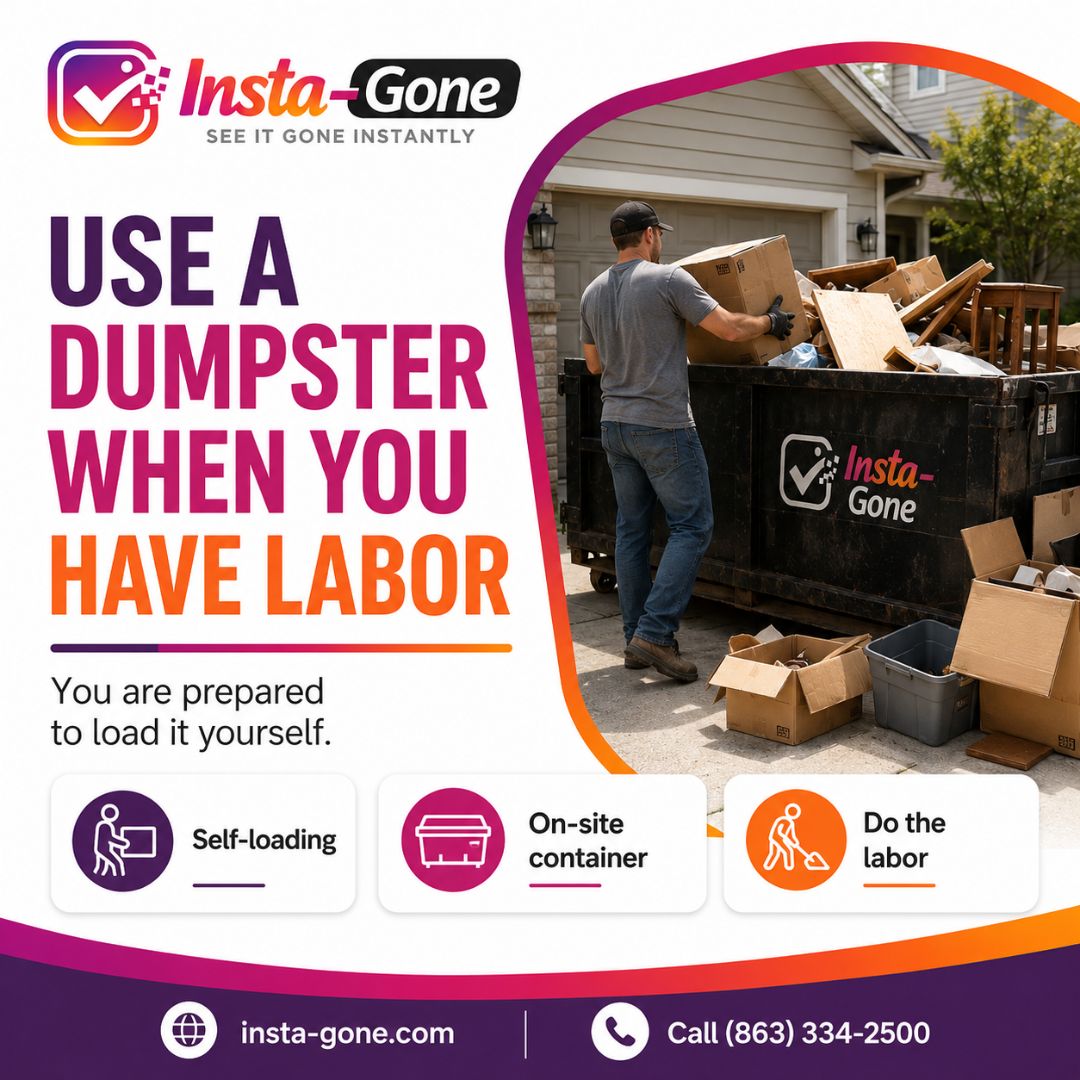
A dumpster can work when you already have the labor, time, and permission to handle the job yourself. If your team is ready to load everything, the items are manageable, and the property has room for the container, a dumpster may be enough.
This works best for simple projects where the work can happen at your pace. A business may have employees clearing light materials from a storage room. A homeowner may be sorting small items from a garage. In those cases, the dumpster is mostly a place to put what has already been carried out.
The key word is “already.” You already have people available. You already know what is going. You already have approval for where the dumpster will sit. Without those pieces, the dumpster can become one more task to manage.
A dumpster does not move heavy furniture, separate items, protect walls, or complete the cleanout for you. It simply waits for someone else to do the labor.
When a Cleanout Crew Is the Better Choice
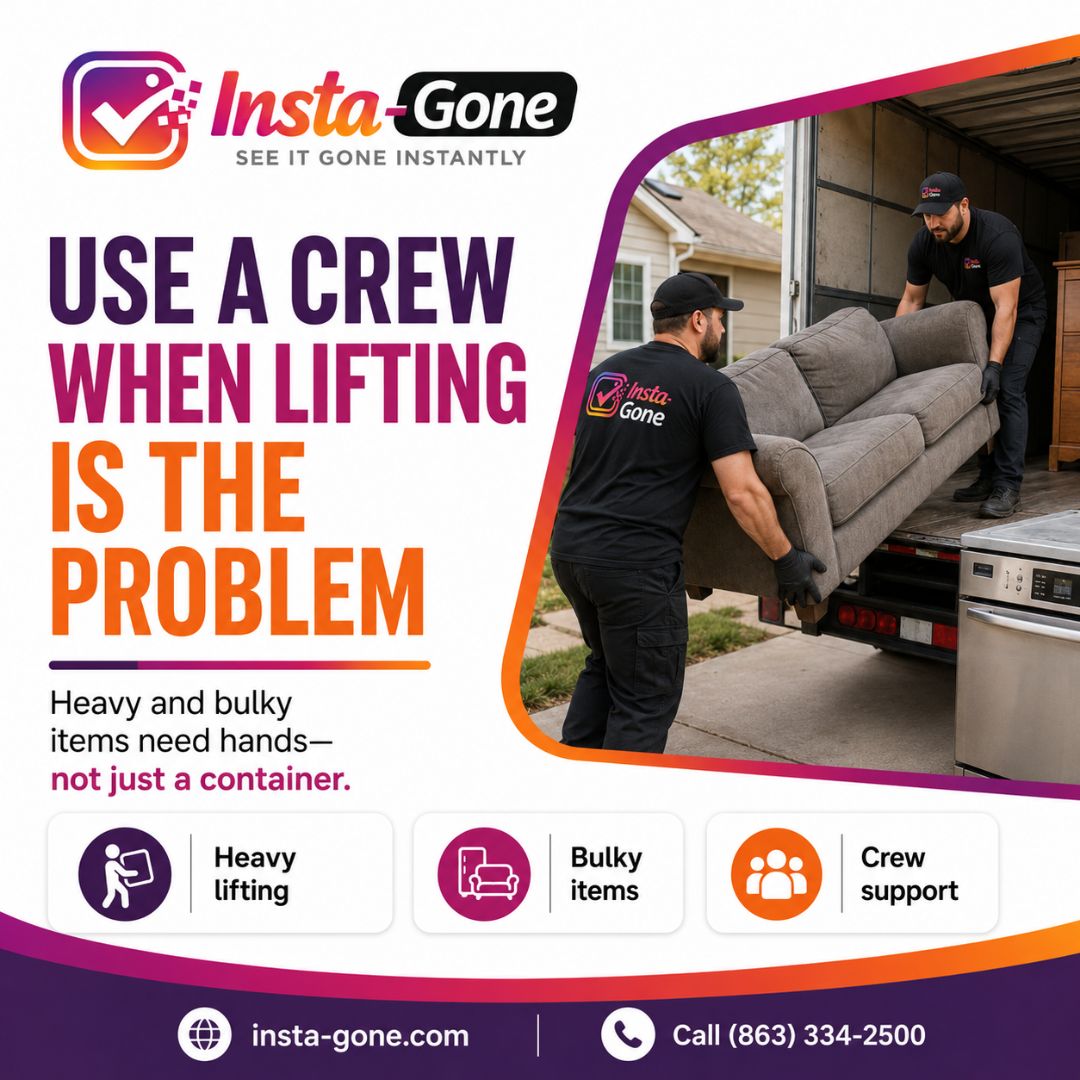
A cleanout crew is often the better choice when lifting is the real problem. Heavy desks, couches, shelving, cabinets, mattresses, equipment, and bulky items need hands, planning, and a clear path out of the property.
This matters in both commercial and residential cleanouts. In an office cleanout, desks and file cabinets may need to be removed before painters or flooring crews arrive. In a retail cleanout, fixtures and backroom clutter may need to be cleared before a lease handoff. In a tenant move-out cleanout, leftover furniture and trash can delay repairs, inspections, or the next resident.
A crew helps because the work is active. Items are identified, carried out, removed from the property, and the space can be reviewed afterward. That is different from having a dumpster on-site while everyone hopes the job gets finished in time.

Check Access and Property Rules
Access can make or break the decision. A dumpster may seem easy until the property has a gate, limited parking, stairs, elevators, narrow halls, shared loading areas, or rules about containers.
Some commercial properties, apartment communities, retail plazas, and managed facilities may not allow a dumpster, or they may restrict where it can sit. Even when a dumpster is allowed, the loading path still matters. A long carry from a back office, upstairs unit, warehouse corner, or storage area adds labor and time.
Before choosing, walk the route from the items to the exit. Check doors, hallways, stairs, elevators, loading zones, parking areas, and building rules. Photos of the items and access points can also help define the cleanout scope more clearly.

Tight Deadlines Need More Than a Container
A dumpster can be useful when there is plenty of time. A cleanout crew becomes more important when the deadline is close.
Property turnovers do not usually wait for a slow cleanout. Repairs, cleaning, painting, inspections, staging, movers, and new occupants may all depend on the space being cleared first. When the cleanout is delayed, everything after it can also be delayed.
This is especially true for commercial cleanouts where the space has to be ready for its next use. Offices, warehouses, retail spaces, and facility turnovers often involve more coordination than a simple pile of junk. There may be items that stay, items that go, rooms that need to be prioritized, and areas that should not be touched.
A cleanout crew works best when the instructions are clear before the job starts. Mark what stays, explain what goes, and share any building access rules upfront.
Think About Responsibility
The biggest difference between a dumpster and a crew is responsibility. With a dumpster, you are responsible for the labor. You decide what goes in. You get items from inside the property to the container. You manage helpers, protect the property, and make sure the work gets done before the next deadline.
With a cleanout crew, the physical removal is handled for you. You still need to give clear instructions, but you are not left carrying the hardest part of the job. That can help during a garage cleanout, full home cleanout, office cleanout, warehouse cleanout, or tenant move-out cleanout.

Choose the Option With Less Friction
A dumpster may look cheaper at first because it feels simple. But the real cost of a cleanout is not only the container. It is also the time, labor, coordination, delays, and effort required to finish the job.
Ask four practical questions. Do you have the labor to load everything yourself? Do you have clear access for a container and loading path? Do you have enough time before repairs, a move, a walkthrough, or a turnover? Do you want to manage the removal yourself?
A better cleanout starts with a clear plan. Walk the space, separate what stays from what goes, photograph large items, check access, and mark anything that should not be removed. Clear instructions reduce confusion and help the property move toward its next step.
Choosing between a cleanout crew and a dumpster is really about choosing how much work you want to carry yourself. If you already have the labor and time, a dumpster may fit. If you need the space cleared with less stress, fewer delays, and a more organized process, a crew is often the better answer.
Need the space cleared fast? Call Insta-Gone at (863) 334-2500 and let’s get it handled.